Loneliness, Mortality and Terror
Okay, folks! Strap in for an extended philosopher file, where we’re talkingabout fundamental problems in philosophy, why there may be no suchthings, what it might mean to approach philosophy more like ananthropologist, and how to redraw our maps of human life.
Severalyears ago, I attended an academic conference on philosophy. Some waythrough the conference, mid-afternoon, at the point when everybody wasbecoming a bit somnolent, I found myself in a half-empty universityteaching room, my notebook in front of me. In front of the room stood atall, Norwegian philosopher. He had an air of philosophical gravity, and he spoke with a slow, careful precision. “I am going to talk about thefundamental conditions of human existence,” he said. I turned the pageon my notebook, understanding that matters of such importance deserved a new, fresh page.
The philosopher started to list thesefundamental conditions, of which there were three in total. “Existential loneliness,” he said. He paused. I wrote those two words down in mynotebook, in capitals, underlining them twice, for good effect. Thephilosopher continued. “Impending mortality,” he said. Again, I wrote it down, nodding to myself seriously. “And…”, the philosopher added,leaving the best until last, “exposure to the terror of existence.”This, too, I wrote down.
As the talk continued, the philosophercarefully expounded on these three fundamental conditions of humanexistence. And the more he talked, the more restless I became. I foundmyself wondering: Were these really the fundamental conditions of human existence? And if they were, who said so? On what grounds?
The talk came to a close. After the talk was the afternoon break, and I was desperate to get out into the sunshine for a few moments. But beforethen, the Norwegian philosopher was taking questions, and I found myself with a burning question that I wanted to ask. So I put up my hand.
I’m never good in these circumstances. I’m not assertive enough. I amawkward and lack confidence. So several other people got there beforeme, asking the philosopher to say more about terror, loneliness andmortality. The philosopher was most obliging in this respect. And then,just as I thought I had a chance to ask this burning question, then thechair called the session to a close, and we all dispersed.
In thebreak, I went to track down the Norwegian philosopher, but he hadalready disappeared. And I never got a chance to ask the question. As aresult, it has stayed with me. As a question, it feels awkward, evensomewhat naïve. But it has continued to haunt me. The question is this:are loneliness, mortality and terror really the fundamental conditionsof human existence? Or are they only the fundamental conditions of (acertain kind of) Norwegian existence?

Connectedness, Vitality and Delight
I have no doubt that the Norwegian philosopher was personally preoccupied by these questions. It seemed to me that these questions were not justwoven deeply throughout his talk, but also throughout his life: theymattered to him, not just as a philosopher but also as a human being.They were part of the warp and weft of his being.
Not only this,but these preoccupations seemed to be ones that the philosopher sharedwith at least a sizeable chunk of the audience. During the question andanswer session, the other philosophers in the room asked lots of deepquestions about loneliness, mortality and terror, but they seemed totake for granted the claim that these things were fundamental to humanlife.
What I was less convinced by was the claim that thesequestions were somehow fundamental. It’s no doubt true that lonelinessis a part of most lives. But so too is connectedness. Is existentialloneliness any deeper than existential connectedness? It’s not certainthat it is. Similarly, death is something we all face (even if, as the Epicureans pointed out, we don’t experience our own death). But living issomething we’re all involved in as well. It’s pretty much a full-timejob. So is our mortality any more fundamental than our ongoing vitality? And as for the terror of existence, there are many terrors in theworld. But there are many things of wonder and delight. So what aboutour experience of these wonders, these delights? Aren’t these a part ofthe story as well? And who is to say that they are less fundamental than terror?
On What is Fundamental
Here, the temptation might be to take one of two approaches. One is todouble-down and defend the claims that these things are fundamental. The other is to strike through the words “loneliness,” “morality” and"terror," and replace them with the words, “connectedness,” “vitality"and “delight.” Then we could set about promoting this new list as a list of what is truly fundamental.
But does this get us very far? Ordoes the problem go deeper than this? Perhaps the problem is in the idea that we can identify certain preoccupations or perspectives or ideas as fundamental, or more fundamental than all others. It is an undeniablycommon move among philosophers: the tendency to take what are legitimate preoccupations, and to give these preoccupations more weight byclaiming that they are somehow fundamental preoccupations. Butthis move also makes conversations about what is interesting in lifesomewhat difficult. If you turn up somewhere with your own bundle ofpreoccupations, and with the conviction that these preoccupations aresomehow fundamental, and somebody else rocks up with their ownpreoccupations, claiming they are equally fundamental, the conversationis going to be hard-going. They will tell you that you can’t talk about your preoccupations until you address their preoccupations. Meanwhile, you will argue precisely the opposite. And if you areequally matched in stubbornness, you will end up having a fruitless andultimately boring discussion which will get you precisely nowhere.
There are, however, better ways of dealing with this. One is to treat what is going on in the way that an anthropologist might (and hope that theother person is going to extend you the same courtesy). In other words,you can think, “Oh, look, here’s a strange and uniquely quirky humanbeing (as we are all strange and uniquely quirky human beings),” and you can resolve to hang out with them a bit more, try and get along withthem, and try and find out how their world works or how it looks. Thisinvolves taking both your own preoccupations, and the other person’s, as legitimate and interesting, but being sceptical about how fundamentalthey really are (even if they feel like they are). And this is a way tohaving more fun and interesting conversations.
Of course, thisisn’t always possible. The other person may not play along, leaving youwith only one choice: between a conversation both boring and fruitless,on the one hand, and no conversation at all. In such circumstances, itis not unreasonable to shrug your shoulders, politely take your leave,and go and talk to somebody else.
On Failing to Worry About God and Death
This tendency to think that or own preoccupations are fundamental, and other people’s preoccupations are less so, is one of the reasons that it canbe both unsettling and enriching to find yourself exposed to unfamiliarphilosophical traditions. Because apparently fundamental questions arealways fundamental questions within a particular cultural and historical framework. And when that framework shifts, so do the questions.
Take God, for example. In what is called, for want of a better term, Western philosophy, the question of how we demonstrate the existence of God isbig news. Pick up any introduction to Western philosophy, and there’slikely to be at least one chapter (even if it is inserted onlyapologetically, towards the end) about God. And for many philosophersdown the ages, questions about God have certainly been included amongthe list of fundamental questions that philosophy should and musttackle. But these questions are really not particularly big news at allin the philosophical traditions of Confucianism. When Confucius was asked about gods and spirits, he typically deflected theconversation. Why ask about gods and spirits, he would say, if you arenot even capable of managing your relationships with your fellow humanbeings? This isn’t to say that Confucius was some kind of atheist,because to be an atheist, you need a well-formed notion of god torefute: and this is precisely what Confucius (and his cultural setting)lacked, something he had no interest in. Questions about eitherdemonstrating or disproving the existence of gods and spirits (let alone trying to work out their attributes) not only never interestedConfucius, but perhaps never entered his mind as interestingphilosophical questions.
In this same passage where Confuciusshrugs off talk about gods and spirits, he also takes a similarlycavalier approach to another apparently big philosophical issue: theissue of death. When asked about death, Confucius replied, “You don’tyet know life; so how can you know about death?” And he left it at that. This is a part of a more overarching insouciance in the face of death.According to the Analects, the Duke of Shu once askedConfucius’s disciple Zilu to describe his teacher. Zilu was at a lossfor words. “But why didn’t you just say this,” Confucius asked. “That Iam simply a person—one so full of passion he forgets to eat, one sojoyful that he forgets his worries, one who does not think about old age as it approaches?”
Here, there is no tremor of existential terror in the face of mortality. The ideal way of facing death, it seems, iswith a shrugging unconcern. This isn’t to say that Confucius is aphilosopher who ignores death. Instead, he thinks that the reallyinteresting question isn’t how we get to grips with the horror of ourmorality (there is no sign of this horror in Confucius), but instead how we deal with the deaths of others, and what it means to care for thedead. When asked about the dead, Confucius said, “Should a friend die,with nobody to care for them, I would bury them.”
If death does present a big philosophical issue for Confucius (and for later Confucians like Xunzi), the big issue is how we should care for the dead and dying, and how weshould mourn, so that we can better care for the living. When his dearfriend Yan Hui died, Confucius mourned so bitterly his disciplesreprimand him. But Confucius replied, “If I am not to mourn for thisman, then for whom?”
So it wouldn’t be quite accurate to say thatdeath is a complete non-problem for Confucius. But if death does present us with problems, these are not the same kind of problems as those that preoccupy Norwegian philosophers.
Constellations of Thought

It is, of course, possible to say that Confucius was misguided. We couldclaim that he didn’t recognise the importance of questions about God, or about death (or about other big issues, like Free Will… but we’ve not got space to open that can of worms!), and that this was aphilosophical error. We could say that in comprehensively failing torecognise these kinds of questions as fundamental, Confucius was simply a bad philosopher. But it’s not clear that this teaches us anything newabout Confucius’s preoccupations, or about our own preoccupations, orabout human life in general. Conversely, we could dig in and claim thatConfucius’s concerns are the real, true fundamental concerns, and thateverybody else (from Saint Augustine to Norwegian philosophers) is wrong or misguided. But again, this doesn’t get us very far.
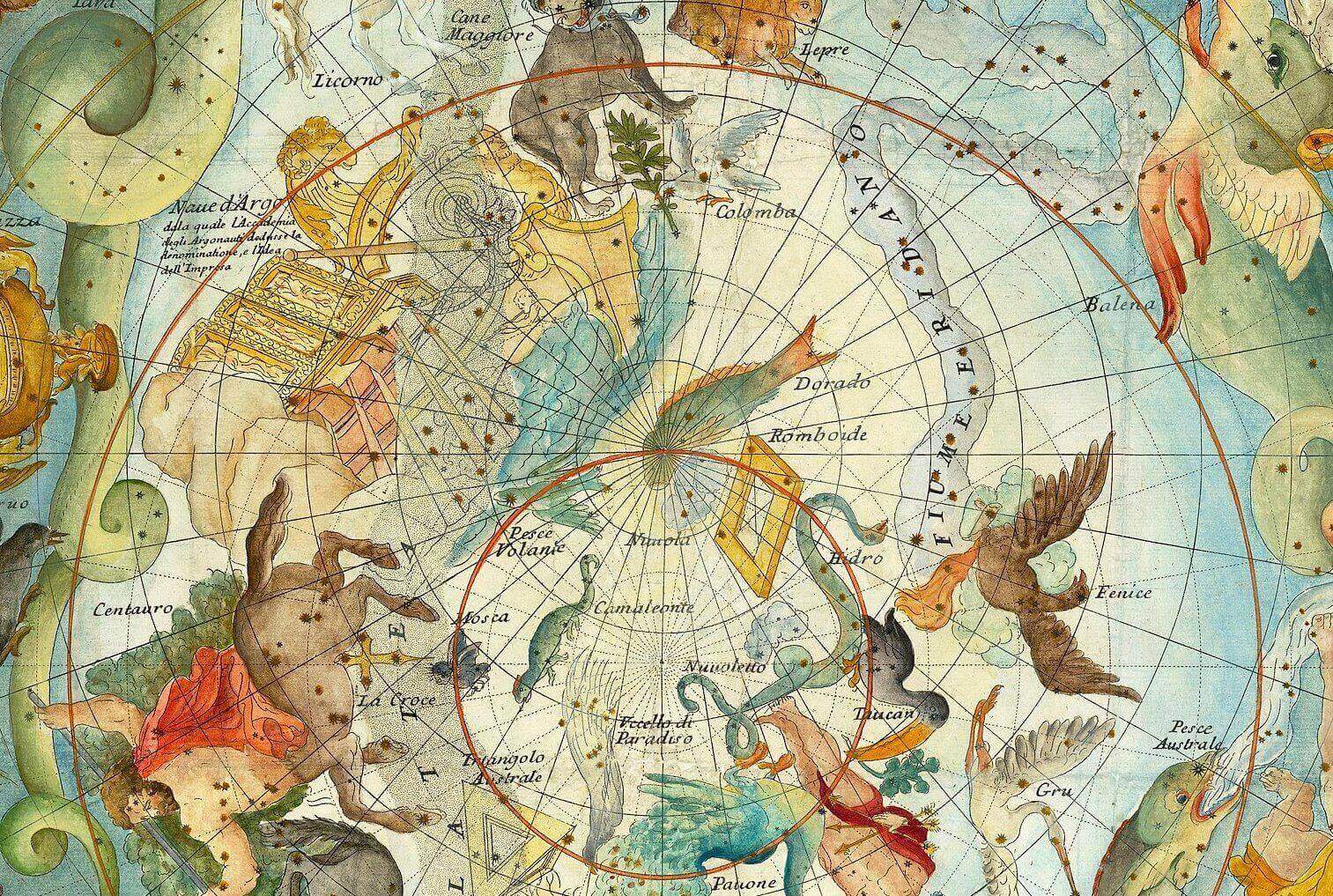
Instead,it is more useful to go back to that more anthropological approach, andto think in terms of constellations of thought, each of which clusteraround specific sets of concerns and preoccupations. These concerns andpreoccupations may be (as is the way with constellations) contingent and to some extent arbitrary: they are the result of particular historiesand particular sets of conditions. But they are no less compelling forall that.
This is one reason that it is worth reading across andbetween philosophical traditions. Because the more you read acrossdifferent philosophical traditions, the more it becomes apparent that in these traditions, the maps of preoccupations are very different fromeach other. What is a problem in one place is often a non-problemsomewhere else. And vice versa.
This isn’t to say that therearen’t many points of connection: there are issues and tensions thatrecur throughout our lives, simply by virtue of being human:pre-philosophical facts we can’t get round. It’s a fact that we all die. It’s a fact that we need to eat and find shelter to survive. It’s afact that we are social animals. But the meanings we give to death, orour need for nourishment and shelter, or our social existence, are notthe same across contexts. There is no one map for human life. Andthinking there should be a single map, or a set of fundamental truths, is going to cramp our style and diminish our creativity.
This, finally, is one reason why here at Looking for Wisdom, we care about exploring a rich diversity of philosophical traditions. Because in doing so, we can free ourselves from asking the same questions we have always asked, and we can find ways to start creatively drawing new maps ofhuman life.